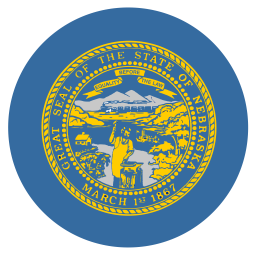
Nebraska State Facts & Information

2.01M
Population (2024)
$189B
State GDP
Lincoln
State Capital
Omaha
Largest City

State Information


  • State Flag: nebraska
  • Governor: Jim Pillen (R)
  • Nickname: The Cornhusker State
  • State Bird: Western Meadowlark
  • State Flower: Goldenrod
  • Statehood: March 1, 1867

Frequently Asked Questions About Nebraska

As of July 1, 2024, Nebraska's population reached 2,005,465, surpassing the 2 million milestone for the first time in state history. The state added 17,601 people in 2024, representing a 0.88% annual growth rate, ranking Nebraska as the 17th fastest-growing state in the nation.

Jim Pillen (Republican) is the 41st Governor of Nebraska, having assumed office in January 2023. A veterinarian and livestock producer, Pillen previously served on the University of Nebraska Board of Regents from 2013 to 2023. He made history as Nebraska's first female Attorney General in 2004.

Lincoln is Nebraska's capital city, having been renamed from Lancaster and chosen as the state capital in 1869. With a 2020 population of 291,082, Lincoln is the state's second-largest city. Omaha is Nebraska's most populous city with 486,051 residents (2020 census), making it the 41st-most populous city in the United States.

Nebraska's economy has a GDP of approximately $189.2 billion (2024), ranking 10th highest per capita among all 50 states. The finance, insurance, and real estate sector contributes around $31.83 billion, while manufacturing adds $17.42 billion. Agriculture remains fundamental to the state's economy, with row crops like wheat, corn, and soybeans, plus a strong livestock industry.

Nebraska officially adopted "The Cornhusker State" as its nickname in 1945, inspired by the University of Nebraska athletic teams. The name refers to the traditional method of harvesting corn by "husking" it by hand before modern machinery was invented. Corn is a leading product of Nebraska, making this an especially fitting nickname. The state is also sometimes called "The Beef State" due to its cattle industry.

Nebraska's state bird is the Western Meadowlark, adopted in 1929 by vote of schoolchildren. The state flower is the Goldenrod (adopted 1895), which blooms from July through October. Nebraska became a state on March 1, 1867, making it the 37th state admitted to the Union.

International migration is the largest driver of Nebraska's population growth, reaching 12,978 new residents in 2024. Natural change (births minus deaths) contributed about 6,000 new residents, ranking sixth nationally. However, domestic migration showed a net loss of about 1,500 people moving to other states between July 2023 and July 2024.

Nebraska maintains one of the lowest unemployment rates in the country at 3.0% (as of May 2025), significantly below the national rate of 4.2%. The state's strong labor market and diverse economy contribute to this consistently low unemployment rate.

Last updated on November 29, 2025