Nebraska State Guide
The Cornhusker State
"Equality Before the Law"
Quick Facts
Geography & Borders
Nebraska is located in the Great Plains region of the central United States. The state covers approximately 77,358 square miles, making it the 16th largest state by area.
Bordering States:
- North: South Dakota
- East: Iowa and Missouri (separated by the Missouri River)
- South: Kansas
- West: Colorado and Wyoming
Major Rivers
- Missouri River: Forms eastern border
- Platte River: Central Nebraska waterway
- Niobrara River: Northern Nebraska
- Republican River: Southern region
Geographic Regions
- Eastern Plains: Rolling hills, agricultural
- Sandhills: Largest grass-stabilized dunes
- Western High Plains: Semi-arid, ranching
- Pine Ridge: Highest point (5,424 ft)
Major Cities
Nebraska's urban centers range from the bustling metropolis of Omaha to smaller regional hubs across the state.
Omaha Largest
Eastern Nebraska (Douglas County)
Population: 485,000+
Nebraska's largest city and economic hub. Home to Berkshire Hathaway (Warren Buffett), the renowned Henry Doorly Zoo and Aquarium, and the College World Series. Major center for insurance, telecommunications, and transportation industries.
- Henry Doorly Zoo (world-class)
- College World Series venue
- Fortune 500 headquarters
- Old Market entertainment district
Lincoln Capital
Southeastern Nebraska (Lancaster County)
Population: 290,000+
State capital and home to the University of Nebraska-Lincoln. Major government and education center with growing technology and healthcare sectors. Known for Huskers football tradition.
- State Capitol building
- University of Nebraska-Lincoln
- Haymarket District
- Memorial Stadium (Huskers)
Bellevue
Eastern Nebraska (Sarpy County)
Population: 65,000+
Nebraska's oldest continuous city, located just south of Omaha. Home to Offutt Air Force Base, headquarters of U.S. Strategic Command. Part of the Omaha metropolitan area.
Grand Island
Central Nebraska (Hall County)
Population: 52,000+
Regional center for central Nebraska's agricultural region. Major railroad hub and meat processing center. Named after an island in the Platte River.
Kearney
South Central Nebraska (Buffalo County)
Population: 34,000+
Home to University of Nebraska at Kearney. Located along Interstate 80 and historic Oregon Trail. Known for annual Sandhill Crane migration viewing.
Fremont
Eastern Nebraska (Dodge County)
Population: 27,000+
County seat of Dodge County, located northwest of Omaha. Agricultural processing and manufacturing center along the Platte River.
Hastings
South Central Nebraska (Adams County)
Population: 25,000+
Regional center with strong agricultural ties. Known for being the birthplace of Kool-Aid. Home to Hastings College and Hastings Museum.
Norfolk
Northeast Nebraska (Madison County)
Population: 25,000+
Commercial hub for northeast Nebraska. Manufacturing and distribution center. Known as "The Star City of the North."
Capital & Government
Lincoln - The Capital City
Lincoln serves as Nebraska's capital city, located in Lancaster County in the southeastern part of the state. The city has been the state capital since Nebraska achieved statehood in 1867.
Nebraska State Capitol
- Completed: 1932
- Style: Art Deco architecture
- Height: 400 feet (tallest capitol in U.S.)
- Features: "Tower on the Plains" design
- Tours: Free public tours available
Unique Legislature
- Unicameral: Only state with single-chamber legislature
- Members: 49 senators (nonpartisan)
- Established: 1937
- Term: Four years
- Term Limits: Two consecutive terms
Economy & Industry
Nebraska's economy is diverse, with strong foundations in agriculture, manufacturing, and services. The state's strategic central location and business-friendly environment have attracted major corporations.
Agriculture
- Corn: Top producer nationally
- Beef: Leading cattle state
- Soybeans: Major crop
- Pork: Significant hog production
- Wheat: Important grain crop
- Ethanol: Major biofuel producer
Major Businesses
- Berkshire Hathaway: Warren Buffett's conglomerate
- Union Pacific: Railroad headquarters (Omaha)
- Mutual of Omaha: Insurance
- TD Ameritrade: Financial services
- ConAgra Foods: Food processing
- Cabela's: Outdoor retail (Sidney)
Manufacturing
- Food processing (meat packing)
- Agricultural equipment
- Transportation equipment
- Fabricated metals
- Machinery manufacturing
Service Industries
- Insurance and financial services
- Healthcare
- Telecommunications
- Transportation and logistics
- Higher education
Time Zones
Nebraska is divided between two time zones, with the majority of the state's population in the Central Time Zone.
Central Time Zone
Coverage: Eastern Nebraska (most of the state)
- Includes Omaha and Lincoln
- Most of Nebraska's population
- Roughly east of the 100th meridian
- UTC-6 (Standard) / UTC-5 (Daylight)
Mountain Time Zone
Coverage: Western Nebraska panhandle
- Western counties (Scotts Bluff, etc.)
- Less populated region
- Roughly west of the 100th meridian
- UTC-7 (Standard) / UTC-6 (Daylight)
History & Statehood
Nebraska's history reflects its role as a crossroads of westward expansion and its development from frontier territory to agricultural powerhouse.
Historical Timeline:
Early History
- Pre-1800s: Home to Native American tribes (Omaha, Ponca, Pawnee, Sioux)
- 1803: Louisiana Purchase includes Nebraska territory
- 1804-1806: Lewis and Clark Expedition passes through
- 1820s-1840s: Fur trading posts established
Path to Statehood
- 1854: Nebraska Territory created (Kansas-Nebraska Act)
- 1860s: Homestead Act brings settlers
- March 1, 1867: Nebraska becomes 37th state
- 1867: Lincoln designated as capital
Development Era
- 1860s-1890s: Transcontinental railroad construction
- 1880s: Agricultural expansion
- 1890s: Populist movement origins
- 1904: Nebraska State Capitol building begun
Modern Era
- 1937: Unicameral legislature adopted
- 1950: College World Series moves to Omaha
- 1960s-present: Economic diversification
- Today: Agricultural and business leader
Pioneer Heritage:
Homestead Act Impact: The Homestead Act of 1862 was pivotal to Nebraska's settlement. This federal law offered 160 acres of land to settlers who would farm it for five years. Nebraska saw one of the highest rates of homestead claims, with thousands of families establishing farms across the prairie. The state's development was shaped by these pioneers who transformed the grasslands into productive agricultural land.
Historic Trails: Nebraska was crossed by major westward migration routes including the Oregon Trail, Mormon Trail, and Pony Express. Landmarks like Chimney Rock and Scotts Bluff served as important waypoints for pioneers heading west during the mid-1800s.
Notable Attractions & Culture
Henry Doorly Zoo & Aquarium
Location: Omaha
- Consistently rated world's best zoo
- World's largest indoor desert (Desert Dome)
- World's largest indoor rainforest
- Scott Aquarium with underwater tunnel
- African Grasslands exhibit
College World Series
Location: Omaha
- Held in Omaha since 1950
- Charles Schwab Field Omaha venue
- NCAA Division I championship
- Annual June event
- Major tourism draw
Huskers Football
Location: Lincoln
- University of Nebraska football
- Memorial Stadium (capacity 85,000+)
- Multiple national championships
- Legendary tradition since 1890
- State-wide following
Historic Sites
- Chimney Rock: Oregon Trail landmark
- Scotts Bluff: National monument
- Homestead National Monument: First homestead claim
- Strategic Air Command Museum: Aviation history
- Arbor Lodge: Arbor Day founder's estate
Frequently Asked Questions
The capital of Nebraska is Lincoln, with a population of over 290,000 residents. Lincoln serves as the state capital and is home to the University of Nebraska-Lincoln, the state's flagship university. The city is the second-largest in Nebraska after Omaha.
Lincoln was designated as the state capital when Nebraska achieved statehood on March 1, 1867. The city is named after President Abraham Lincoln and serves as the center of state government, housing the iconic Nebraska State Capitol building completed in 1932.
Omaha is Nebraska's largest city with a population of over 485,000 residents. Located along the Missouri River on the eastern border, Omaha is a major economic hub and home to Fortune 500 companies including Berkshire Hathaway, led by Warren Buffett. The city is known for the Henry Doorly Zoo and Aquarium, consistently rated among the world's best zoos.
Omaha also hosts the annual College World Series, the NCAA Division I baseball championship, which has been held at Charles Schwab Field Omaha (formerly TD Ameritrade Park) since 1950. The city's economy is diverse, with major sectors including insurance, telecommunications, transportation, and food processing.
Nebraska has 93 counties, making it one of the states with the most counties relative to its population. This large number of counties reflects Nebraska's agricultural heritage and the distribution of settlements during westward expansion in the 19th century.
The 93 counties range from heavily populated urban counties like Douglas County (Omaha) and Lancaster County (Lincoln) to sparsely populated rural counties in the western part of the state. Many counties were established during the territorial period and early statehood to accommodate the influx of homesteaders and pioneers settling the Nebraska prairie.
Nebraska became the 37th state on March 1, 1867, just after the Civil War ended. The state's admission was delayed for several years due to political disputes during the Reconstruction era. Nebraska's statehood came during a period of rapid westward expansion and settlement.
Prior to statehood, Nebraska was part of the Nebraska Territory, which was created by the Kansas-Nebraska Act of 1854. The Homestead Act of 1862 brought thousands of settlers to the territory, increasing the population enough to qualify for statehood. Upon admission, Lincoln was designated as the state capital, named in honor of the recently assassinated President Abraham Lincoln.
Nebraska is known as "The Cornhusker State" in reference to the state's primary agricultural industry. Corn production is central to Nebraska's economy, and the term "cornhusking" refers to removing the husks from corn. The University of Nebraska athletic teams are also called the Cornhuskers, further cementing this identity.
Nebraska is one of the nation's leading corn producers, with millions of acres dedicated to corn cultivation. The state also leads in cattle production, and much of the corn grown is used for livestock feed and ethanol production. The Cornhusker nickname reflects the agricultural heritage that has defined Nebraska since settlement.
Most of Nebraska observes Central Time Zone, but the western portion of the state, roughly west of the 100th meridian, observes Mountain Time Zone. This division affects counties in the western panhandle. The majority of Nebraska's population lives in the Central Time Zone portion of the state.
Major cities like Omaha, Lincoln, Grand Island, and Kearney are all in the Central Time Zone. The Mountain Time Zone area includes cities like Scottsbluff and other communities in the western panhandle region. When traveling across Nebraska on Interstate 80, you may cross from Central to Mountain Time in the western part of the state.
Nebraska is bordered by six states: South Dakota to the north, Iowa and Missouri to the east (separated by the Missouri River), Kansas to the south, and Colorado and Wyoming to the west. This central location made Nebraska an important crossroads during westward expansion.
The Missouri River forms much of Nebraska's eastern border with Iowa and Missouri, while the state shares land borders with the other neighboring states. Nebraska's central location in the Great Plains has historically made it an important transportation corridor, with major interstate highways and railroad lines crossing the state connecting the East and West coasts.
Nebraska's economy is strongly based on agriculture, particularly beef production and corn farming. The state is a leading producer of both corn and cattle. Beyond agriculture, Nebraska is home to major businesses including Berkshire Hathaway in Omaha, and has growing sectors in insurance, telecommunications, and transportation. The state also benefits from its strategic location along major transportation corridors.
Manufacturing is also significant, particularly food processing, agricultural equipment, and transportation equipment. Service industries have grown substantially, with Omaha becoming a major center for insurance, financial services, and telecommunications. Warren Buffett's Berkshire Hathaway, headquartered in Omaha, is one of the world's largest companies. The state's business-friendly environment, low unemployment, and central location continue to attract diverse industries.
Omaha, Nebraska has been the home of the NCAA College World Series since 1950. The championship tournament for college baseball is held annually at Charles Schwab Field Omaha (formerly TD Ameritrade Park). This event brings thousands of visitors to Omaha each June and has become a significant part of the city's identity and economy.
The tournament features the top eight college baseball teams competing in a double-elimination format to determine the national champion. The event generates substantial economic impact for Omaha, with fans, families, and teams spending millions during the tournament. The city has invested heavily in world-class facilities to ensure Omaha remains the permanent home of the College World Series, with the current stadium opening in 2011.
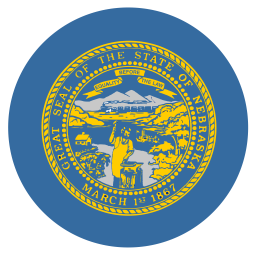
Nebraska's state motto is "Equality Before the Law," reflecting the state's commitment to justice and equal treatment under the law. This motto appears on the state seal and represents the democratic principles that guided Nebraska's formation during the post-Civil War era.
The motto was adopted when Nebraska became a state in 1867, during the Reconstruction period following the Civil War. It reflects the ideals of equality and justice that were particularly significant during that era of American history. Nebraska's unique unicameral legislature, adopted in 1937, further demonstrates the state's commitment to efficient and equitable government, as it's the only state with a single-chamber, nonpartisan legislature.