West Virginia State Facts & Information
State Information
-
State Flag:
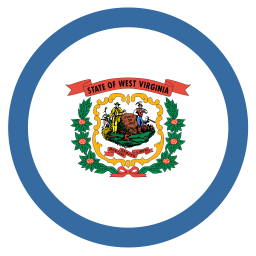
Quick Facts (2024)
- Capital: Charleston
- Population: 1,769,979 (2024 estimate)
- Governor: Patrick Morrisey (R)
- Area: 24,230 square miles
- State Motto: "Montani Semper Liberi" (Mountaineers are Always Free)
- Nickname: The Mountain State
- GDP (2024): $106.5 billion
- GDP Per Capita: $47,262
State Resources
Frequently Asked Questions About West Virginia
West Virginia's population in 2024 is 1,769,979, making it the 39th most populated state in the country. The state experienced a slight decline of 0.03% from 2023. While the overall population is decreasing due to outmigration and low birth rates, some areas like Berkeley County and Jefferson County in the Eastern Panhandle have grown by 12.9% and 6.2% respectively since 2020, driven by remote work opportunities and low cost of living.
Patrick Morrisey is the 37th Governor of West Virginia, taking office on January 13, 2025. A member of the Republican Party, he defeated Democratic nominee Steve Williams in the 2024 election. Prior to becoming governor, Morrisey served as West Virginia's Attorney General from 2013 to 2025, becoming the first Republican in that role since 1933. He is also the first Republican elected to a first gubernatorial term since 1968.
West Virginia's nominal GDP for 2024 is approximately $106.5 billion, with a real GDP of $83.7 billion (adjusted for inflation). The state's GDP per capita is $47,262, ranking 49th among all states. Economic growth was 3.1% in the first quarter of 2024 but slowed to 2.1% in the second quarter. Major industries include government services, manufacturing, healthcare, and agriculture. The healthcare sector has been particularly strong, adding 3,100 jobs in 2024.
West Virginia's official motto is "Montani Semper Liberi," a Latin phrase meaning "Mountaineers are Always Free." This motto was adopted in 1872 with the signing of the state constitution and appears on the state seal and flag. It reflects the independent spirit of West Virginians and commemorates the state's separation from Virginia during the Civil War to remain loyal to the Union, embodying themes of freedom and self-determination.
West Virginia earned the nickname "The Mountain State" because it is located entirely within the Appalachian Region and is almost completely mountainous. The state has an average elevation of approximately 1,500 feet above sea level, making it the highest state east of the Mississippi River. This rugged, mountainous terrain defines the state's character, natural beauty, and outdoor recreation opportunities.
West Virginia was admitted to the Union on June 20, 1863, during the American Civil War. It is the only state formed by seceding from a Confederate state (Virginia). The western counties of Virginia remained loyal to the Union and voted to separate, creating a new state. This unique origin makes West Virginia a key border state in American history and explains its strong tradition of independence reflected in the state motto.
The Eastern Panhandle counties are experiencing the fastest growth in West Virginia. Berkeley County grew by 12.9% and Jefferson County by 6.2% since 2020. These areas benefit from proximity to the Washington D.C. metropolitan area, remote work opportunities, and relatively low cost of living. In contrast, much of the rest of the state faces population declines, with Kanawha County (the most populous at 173,000 residents) declining by 4.2%.
West Virginia's economy is driven by several key industries. Government and government enterprises add the most value at approximately $12.68 billion, followed by manufacturing at $7.14 billion. The healthcare industry is growing strongly, adding 3,100 jobs in 2024. Agriculture, forestry, fishing and hunting have shown exceptional growth, with 2024 GDP double that of 2014. Historically known for coal mining, the state is diversifying its economic base while maintaining traditional industries.
Last updated on November 29, 2025